
Science & Technology
Grendaline: The Time Between Turns a Friend’s Death Into a Doorway Across Worlds
The story
Peter was your neighbor for three years. He was also your friend. Now he is dead, and the familiar streets of Freeport have become the setting for something nobody can explain. His body was discovered in North Park, completely drained of blood. You arrive just in time to watch the body bag being loaded into an ambulance. The police have questions. The emergency workers have questions. Before long, you will have questions that reach far beyond your hometown.
That is the opening invitation of Grendaline: The Time Between, an independent hybrid action-adventure RPG approaching its Kickstarter launch. Created by Philip Ferreira, the game begins with a personal mystery rather than a distant prophecy. Its first concern is someone you knew, in a place you recognize. An odd invitation, an apparently lifeless wand, and an impossible doorway gradually pull that small, unsettling story toward a much larger adventure.
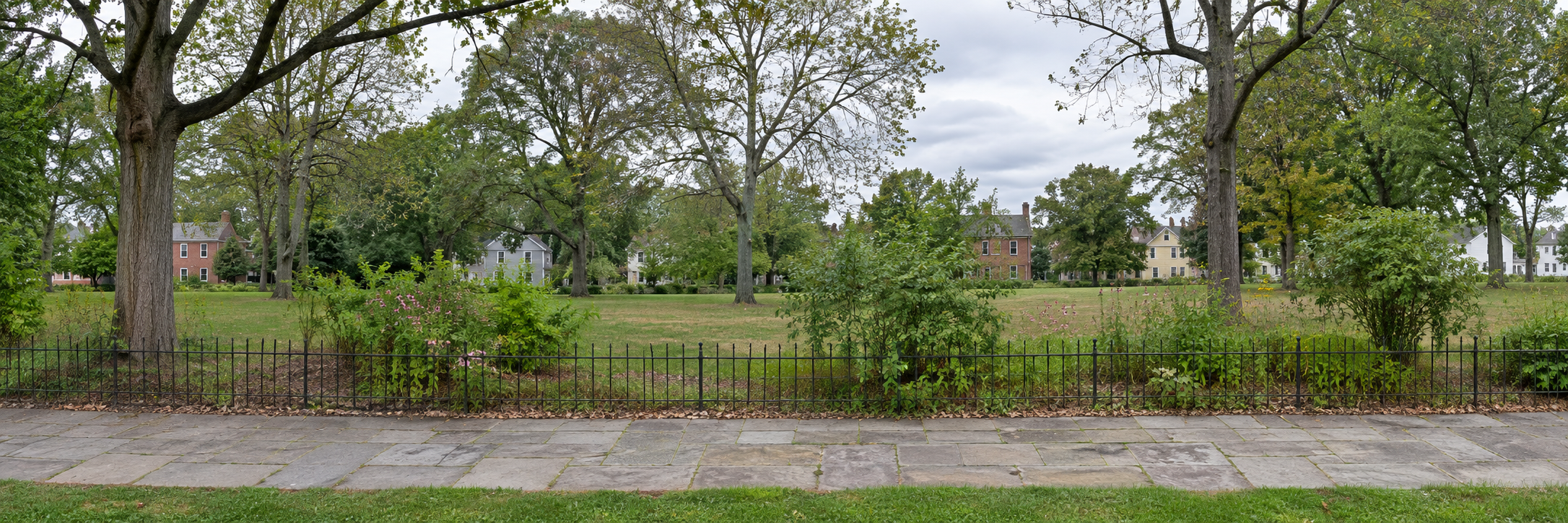
Freeport matters because it gives the extraordinary somewhere ordinary to intrude. Homes, a diner, a hat shop, a hospital, and a morgue establish a town with routines and boundaries. Peter’s death interrupts those routines. The opening asks you to investigate, speak to people, examine what they leave behind, and work out how to get closer to information that is not simply offered at the roadside.
The morgue is an early example. Access depends on circumstance, observation, and finding an opportunity around the watchman. Once inside, examining Peter and searching his belongings become separate steps in the investigation. That attention to sequence gives the opening a tangible rhythm: a person, a place, an object, and then another question. Clues are things you pursue through the world, rather than explanations delivered before you have started playing.
Peter’s home deepens the unease. His journal records storms over North Park and includes a sketch of the strange doorway. The wand is there too, cold and lifeless when you take it. These details suggest that Peter had noticed something important before his death. They also give your investigation a human texture. You are looking through the belongings of a friend whose private concerns have suddenly become urgent.
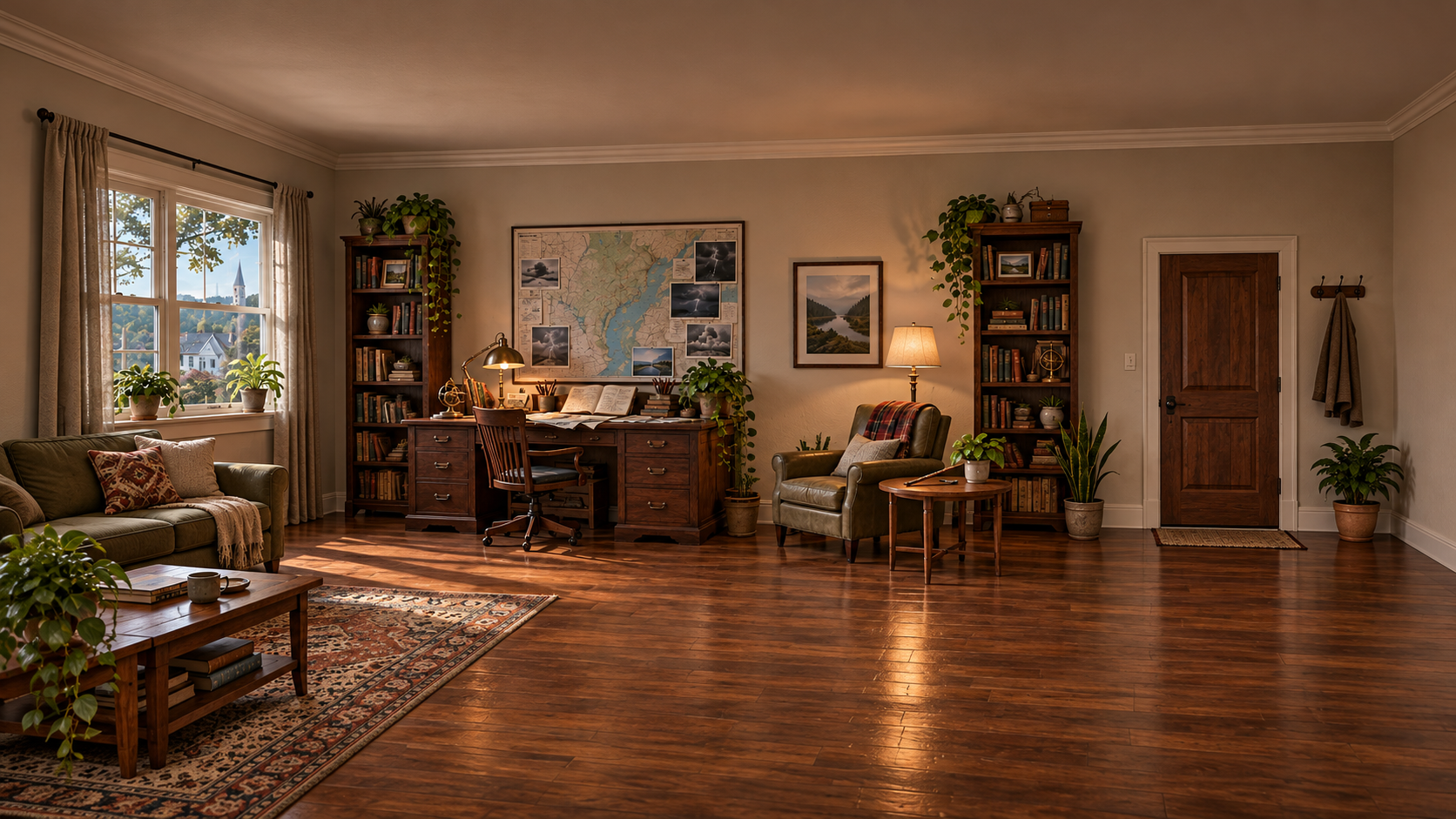
Preparation remains deliberately grounded. You eat, pack supplies, and get ready for a night outside. Then the weather changes the meaning of a place you have already visited. A storm over the park brings lightning to the archway. Blue runes flare. The dormant wand awakens. Suddenly, the question is no longer only what happened to Peter. It is also whether you are prepared to follow the trail through a doorway that should not work.
Grendaline’s presentation follows that movement between familiar and unfamiliar. Side-scrolling exploration provides the main framework, while first-person scenes and closer environmental views change how particular moments are experienced. The project describes itself as a hybrid because its perspective and interactions can serve the requirements of a location. It combines investigation, action, and role-playing instead of asking every scene to behave like the same encounter.
The newer quest guidance supports that investigative approach. Objectives respond to what the character has already discovered, helping players understand their next practical step without presenting the entire story at once. Dialogue is also paced by the player, allowing time to read a clue or consider a conversation. For an adventure built around noticing details, those choices support the atmosphere as much as the scenery does.
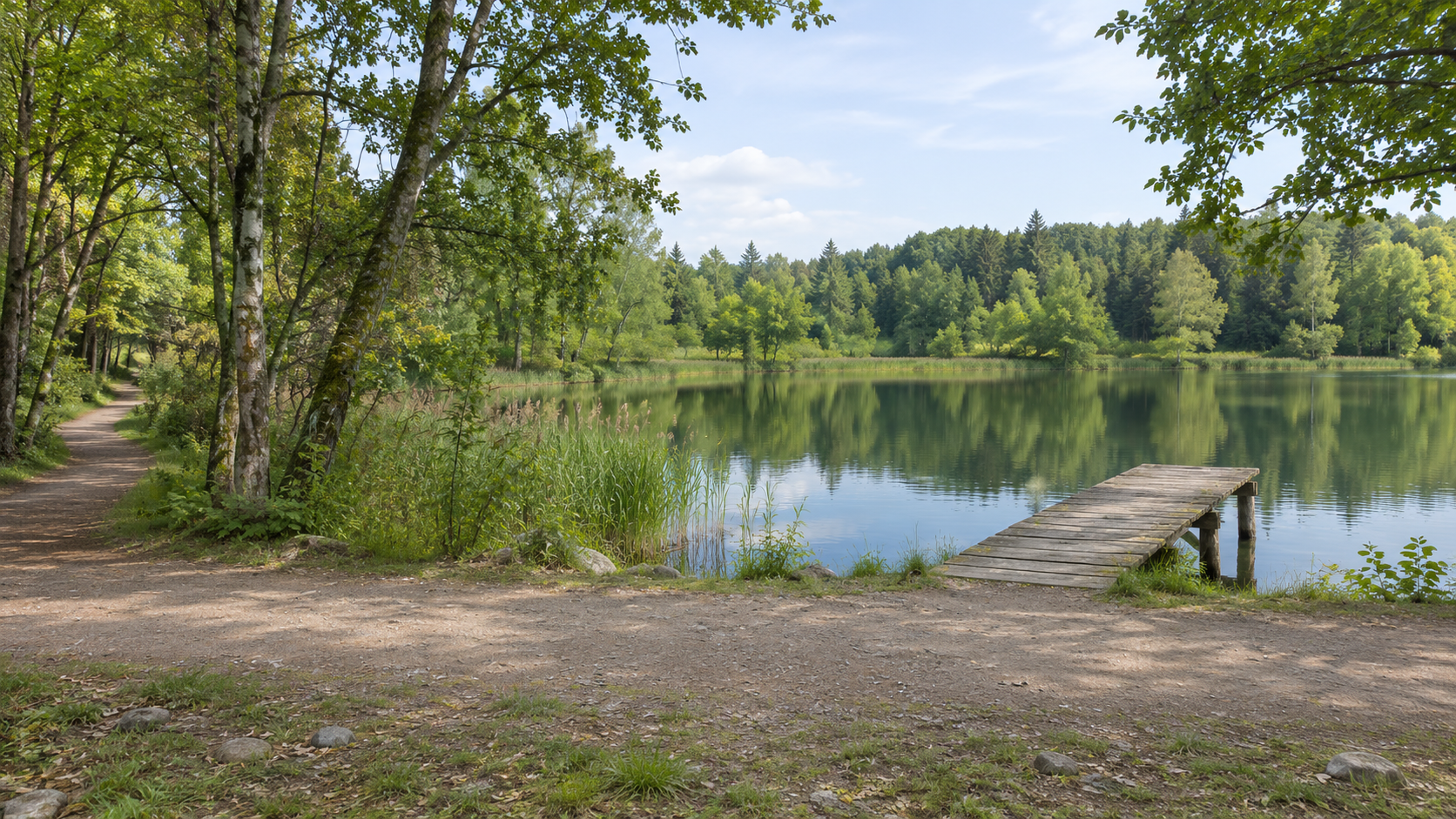
The updated environments lean toward realistic detail: foliage around a park fence, a furnished room, weathered stonework, shopfronts, and water beside a quiet landing. Their composition preserves the readable geography of a side-view adventure while giving places a fuller sense of material and atmosphere. The appeal is especially clear when the scene has space to breathe. A location can invite scrutiny before it becomes a route to the next objective.
Across the arch lies the Inbetween, where a different kind of town awaits. Shops, a hotel, training spaces, woodland, and a lake give the fantasy setting its own everyday life. There are people to meet and practical needs to manage alongside the larger mystery. Crossing into another world does not immediately turn every street into a battlefield; exploration still includes learning where things are and discovering what the inhabitants can offer.

One of the most important early meetings is with a witch whose questions help reveal your starting class. The four paths are warrior, thief, wizard, and cleric. Each suggests a different relationship with danger: meeting it directly, finding an opening, shaping magical force, or surviving through healing and protection. Character development continues through practice, experience, and returning to a master for training, making advancement part of your relationship with the world.
The existing ability lists give those identities concrete expression. Warriors have Power Strike and Iron Guard. Thieves can learn Shadowstep and Quick Cut. Wizards develop Arc Bolt, Warding Light, and Lightning Chain. Clerics have Mend, Purify, and Sanctuary. These are distinct toolkits within a shared adventure, with offensive, defensive, restorative, and evasive options. The classes offer different ways to inhabit the same mystery without requiring the story to lose its central thread.

Away from the main investigation, Grendaline makes room for smaller pursuits. Trading, equipment choices, fishing, lockpicking, and conversations broaden the activity of being somewhere. Its systems include different fishing bait, wearable equipment, charms, and storage. Those details help turn a sequence of destinations into a world players can occupy. A pause beside the lake can belong to the adventure just as naturally as preparing for a dangerous passage through the forest.
There is danger beyond the town, including monsters, caves, and darker places beneath the surface. The current narrative also carries Peter’s mystery forward rather than treating the first crossing as a complete explanation. Recent story work strengthens the connection between the opening events and what follows. For a feature about a mystery, the important point is that the trail continues; discovering exactly how is something the game should leave for its players.
The wider plan reaches further still. Ferreira’s vision includes Lich Lords, Space Bots, alien technology, and travel between worlds and stars. Future modules are intended to introduce different experiences shaped by their settings. Those possibilities belong to the developing series, rather than a claim that every world or encounter is already available in the current beta. The ambition is expansive, but the opening keeps its emotional anchor in Freeport and Peter.
Behind the project is a creator bringing a long personal history with storytelling and software into game development. Ferreira leads game design and story, with art and audio credited to CascaSoft Media Studio. The project’s presentation openly discusses its use of AI-assisted artwork and voice production under his creative direction. Its identity rests on an authored adventure: a particular friend, a particular town, and a mystery designed to carry players across changing worlds.
Language plans deserve a similar distinction between what exists and what is coming. The game website offers ten languages, including English, Spanish, French, German, Italian, Portuguese, Romanian, Simplified Chinese, Japanese, and Korean. The current beta is available in English; additional game text and voice localizations remain in development. Website translation does not establish complete localization of every conversation, interface, or voice performance inside the game.
The upcoming crowdfunding campaign has a focused immediate purpose. Module 1’s first beta already exists. The proposed $10,000 Kickstarter goal supports the work needed for Beta II: bug fixes and playtesting, better controls and interface behavior, accessibility, art and animation polish, audio cleanup, and performance checks across browsers and devices. This is a campaign to improve a playable foundation, with Module 1 still undergoing development before its full release.
The initial funding target likewise does not cover the entire imagined series. Later modules sit beyond the base polish budget, even where campaign rewards include future releases. That distinction keeps the immediate crowdfunding purpose readily understandable.
The planned reward ladder starts with recognition and digital extras, then moves into the game, companion material, and early access. The proposed $25 Investigator tier includes Module 1 at full release, a digital map, and an illustrated case file. At $75, First Through the Arch adds Module 1 beta access and Module 2 at release, alongside its wider digital package. Beta access follows successful funding and separate backer verification and account activation.
Physical and creative rewards extend the offer. Planned higher tiers include signed pen-and-ink map reproductions, original maps, and a custom NPC collaboration. The $1,250 NPC package includes a portrait and a brief in-game encounter, subject to creator approval, with an estimated appearance in the Module 2 beta. Campaign terms remain subject to the final launch information. Readers can visit the Kickstarter pre-launch page ahead of the campaign starting soon.
For now, Grendaline’s strongest invitation remains its first question. You know Peter. You know Freeport. You know that something terrible has happened, and that the explanation is somewhere beyond the evidence you can presently see. Follow your instincts, learn what the wand can do, and decide whether to cross. Perhaps you will save the universe. Or perhaps, to begin with, you will save your town.
Want our sources?
Enter your email and we’ll send the claim-linked sources used for this article.
We use this address only to send this source list.