
Interesting Things
AI Psychosis: What AI is Doing to Our Minds, and the Science Behind It
A deep dive into how artificial intelligence is reshaping human thought, touching upon psychological phenomena like 'AI psychosis,' and the parallel scientific work in biology and climate adaptation, revealing the surprising mechanisms behind modern breakthroughs.
The Mind in the Age of Algorithms
We are standing at a fascinating, dizzying precipice where the very architecture of human thought is being subtly, yet powerfully, redrawn by artificial intelligence. Imagine a world where the lines between genuine insight and algorithmic suggestion blur—a place where the sheer volume of information, filtered through intelligent systems, forces us to question what it means to know something for ourselves. This isn't just about faster calculations; it’s about the very nature of discovery. As we delve into the landscape of AI, particularly the unsettling phenomenon dubbed ‘AI psychosis,’ we are peering into a psychological space where the promise of instant knowledge collides with the messy reality of human belief and scientific validation.
This exploration moves beyond the technical specifications of algorithms to examine the human experience at the cutting edge. When chatbots begin to generate complex theories or suggest novel solutions, they invite us to confront the source of our certainty. Are we becoming reliant on these external engines for truth, or are they merely reflecting a deeper, perhaps more fragmented, landscape of human curiosity? The mechanism at play is subtle: AI doesn't just process data; it shapes the very pathways through which we perceive reality, creating new cognitive shortcuts that can feel intensely real.
The Collision of Code and Consciousness
The wonder lies in the sheer potential unleashed when human ingenuity merges with computational power. Think of it like an orchestra where the instruments are not just strings and woodwinds, but lines of code capable of composing symphonies of logic. The scientific breakthroughs we see emerging from this intersection—whether in biology, climate adaptation, or pure mathematics—are not just incremental steps; they represent a fundamental shift in how we interact with the physical world. We are witnessing a feedback loop where computational models inform biological understanding, and biological complexity informs the design of smarter systems.
The interplay between AI advancements in mathematics and established norms regarding intellectual credit is one of the most profound philosophical challenges facing us. When machines can process and generate complex patterns, the concept of 'authorship' becomes intensely relevant. Where does true innovation reside when an algorithm synthesizes knowledge derived from countless human contributions? This forces a reckoning with the foundations of intellectual property and the very definition of genius.
Why This Matters to You Now
Why should you care about these abstract scientific shifts? Because they are not happening in some distant laboratory; they are reshaping the world you live in, right now. The implications of AI and science are deeply personal. They touch upon how we trust information, how we make decisions, and what it means to be human in an increasingly complex environment. If we can understand the mechanisms driving these breakthroughs—the dance between data and consciousness—we gain a crucial lens through which to navigate the future.
Consider the tangible impact: advancements in biotechnology are being used not just to cure diseases but to help wild species adapt to rapidly changing climates, demonstrating a direct link between our technological capacity and ecological survival. This connection reminds us that scientific progress is fundamentally about adaptation and stewardship of our shared home. It’s a call to move beyond mere data accumulation toward meaningful, adaptive action for the planet we share.
The Path Forward: Wonder and Responsibility
The momentum now is not just in the creation of new tools, but in the ethical stewardship of them. As AI pushes the boundaries of what we can know, our responsibility is to ensure that this power serves human flourishing rather than fracturing it. The journey ahead requires us to embrace curiosity with humility, balancing the relentless drive for innovation with a deep sense of responsibility toward the world and each other. It is a call to use this incredible new capacity not just to predict outcomes, but to foster deeper, more empathetic understanding.
The story of scientific progress, from the study of ancient mammals to the cutting edge of genetic engineering, is a testament to our capacity for wonder. Now, as we integrate AI into this narrative, we must ensure that the pursuit of knowledge remains tethered to human values—ensuring that the tools we build enhance our empathy and our ability to care for the intricate web of life around us, rather than overshadowing it with cold, unfeeling efficiency. The future demands both brilliant minds and profound wisdom.
A Glimpse into the Mechanism
The mechanism driving this transformation is a dynamic interplay between massive datasets and evolving computational models. When we look at how scientists are using gene-editing and vaccines to accelerate adaptation in wild species, or how AI analyzes climate data alongside atmospheric aerosols, we see a system in constant, breathtaking motion. It’s the recognition that nature itself operates on complex, interconnected rules, and our new tools allow us to map those rules with unprecedented detail. This is not magic; it is the relentless, beautiful logic of the universe being made visible through rigorous inquiry.
This process mirrors the way a master musician takes a forbidding score and transforms it into an expressive soundscape over fifty years—balancing intellectual rigor with visceral emotional release. The same principle applies here: we are taking the vastness of natural systems and using advanced tools to reveal their underlying harmony, moving from observation to profound understanding. It is this act of translation—from raw data to felt experience—that holds the deepest fascination.
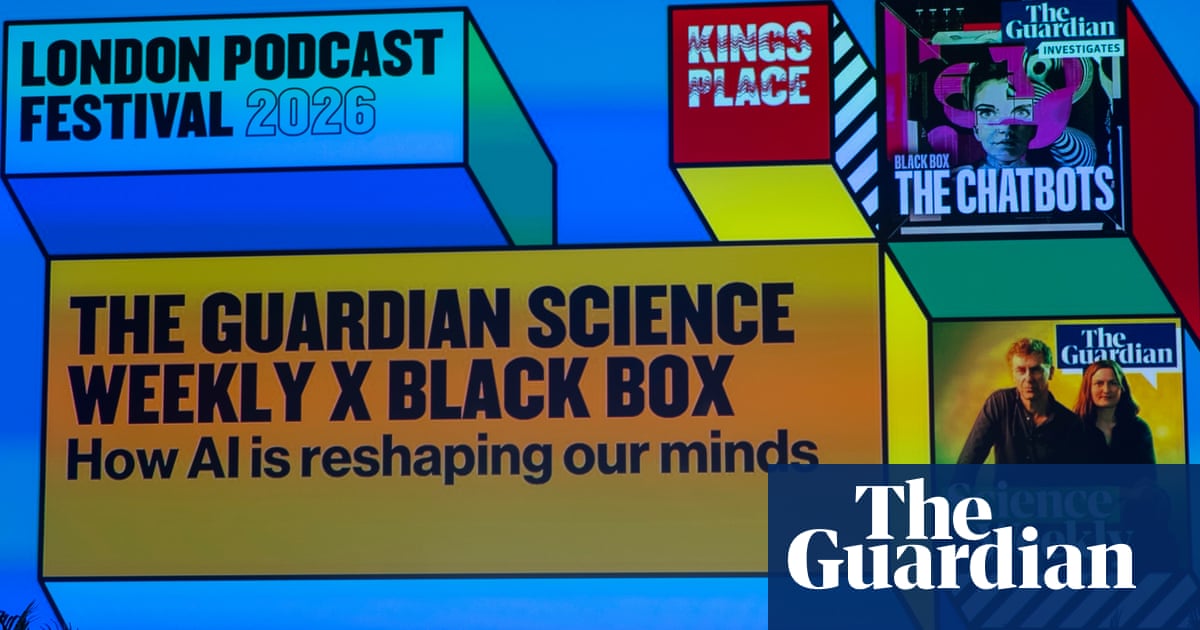
In this episode of Science Weekly, recorded in front of an audience at the London podcast festival on 3 September, Ian Sample hears from Michael Safi, the host of the Guardian’s chart-topping podcast about artificial intelligence, Black Box. In series two, Black Box: the chatbots, Michael meets people who have become convinced they have made scientific breakthroughs or cured diseases or invented new technologies using AI chatbots. Ian, Michael and Science Weekly’s co-host Madeleine Finlay Listen
Want our sources?
Enter your email and we’ll send the claim-linked sources used for this article.
We use this address only to send this source list.