
Interesting Things
Microbes Survive Simulated Ocean on Saturn's Moon: New Signs of Extraterrestrial Life
When Earth microbes are tested against simulated conditions mimicking Saturn's moon Enceladus’s ocean, scientists discover that life can adapt to extreme chemistry, suggesting that icy moons may harbor habitable environments and fueling the search for extraterrestrial life.
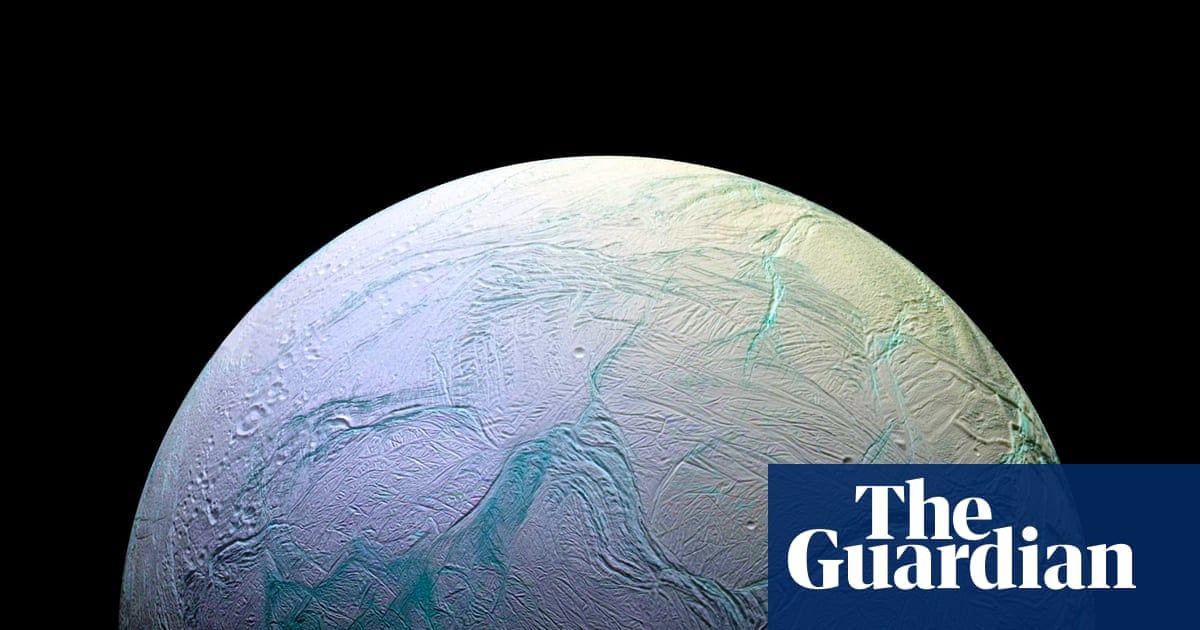
The Ocean Beneath the Ice
The mystery of Enceladus, Saturn's icy moon, has long captivated the scientific community. Since robotic spacecraft began observing it, scientists have detected massive plumes of water vapor erupting from its surface, hinting at a vast saltwater ocean hidden beneath the frozen crust. This discovery immediately shifted the focus toward the possibility of life beyond Earth. The real excitement came when researchers sought to understand if life could thrive in such extreme conditions.
The key to this exploration lay in looking not just at the plumes but at what might exist within that hypothesized ocean. Scientists looked to the deep-sea environments on Earth, specifically near hydrothermal vents—places where life thrives by harnessing chemical energy from the seafloor. These deep-sea microbes have proven remarkably resilient, capable of surviving conditions far harsher than what we typically associate with habitability. They manage to convert hydrogen and carbon dioxide into methane, demonstrating an ability to adapt to extreme chemistry.
To test this theory for Enceladus, researchers built a miniature version of the moon's ocean in the lab. They mixed water with salts and carbonates and added powdered rock to mimic the rocky seafloor. This setup was designed to replicate not only the alkaline environment but also the chemical reactions occurring between the water and the simulated rock, which are thought to be active on Enceladus’s seafloor. The goal was to see if these resilient Earth microbes could survive in this recreated alien brine.
The Resilience of Life
When the experiment was run, the results offered a tantalizing glimpse into the potential habitability of icy worlds. The microbes, which are known to thrive in environments with extremely high alkalinity—a pH level far more alkaline than their known limits—were able to adapt their metabolism to cope with low concentrations of carbon dioxide present in the simulated ocean. This adaptation suggests that life might be far more adaptable than previously imagined, capable of flourishing under conditions we once deemed impossible.
This finding is profound because it removes a significant barrier to considering life on other worlds. If life can survive and adapt in an environment as chemically hostile as the simulated Enceladus ocean, it opens up entirely new avenues for where we might search for extraterrestrial biology. It suggests that habitability isn't confined to Earth-like conditions but could exist across a wider spectrum of physical realities. The possibility that life could exist on Enceladus, or similar icy moons, is now much more compelling.
While the scientists acknowledged the limitations—stating that they do not know if these specific methanogens would survive for extended periods in the actual moon's ocean—the work itself provides crucial evidence. It moves the conversation from pure speculation to a realm where biological possibility is actively being tested against physical reality, fueling the ongoing search for biosignatures in space plumes and ice particles. The next steps involve planning missions, like the European Space Agency’s L4 mission, to hunt for these signs of life directly.
Looking Ahead
The scientific journey toward understanding Enceladus is far from over. The data gathered from the plumes and the laboratory simulations continues to push the boundaries of what we understand about planetary habitability. While the immediate focus remains on understanding the potential for life, the long-term vision involves ambitious missions aimed at direct exploration. Future endeavors, such as the planned Artemis II mission aiming for the Moon, and even further explorations toward Saturn, are all driven by this fundamental curiosity about whether we are alone in the cosmos.
The work done on Enceladus underscores a universal theme: life finds a way. Whether it is the deep-sea vents on Earth or the simulated ocean of an icy moon, the tenacity of biological systems in adapting to extreme chemistry and pressure suggests that the universe may be teeming with life forms capable of astonishing feats of survival. This pursuit of knowledge, driven by curiosity, remains one of humanity's most vital endeavors, pushing us to re-evaluate our place in the vastness of space.
Ultimately, this scientific endeavor reminds us that the search for life is intertwined with understanding ourselves. By examining the possibility of microbial life on distant worlds, we are engaging with fundamental questions about biology, chemistry, and our own existence. The potential habitability of Enceladus serves as a powerful reminder that the universe holds astonishing secrets waiting to be uncovered through persistent, curious investigation, whether through studying distant plumes or recreating alien environments in a lab.
The Human Connection to Discovery
For the everyday reader, this deep dive into planetary science connects us directly to the vastness of existence. The idea that life could exist in an ocean miles away, shielded by ice and distance, transforms abstract scientific concepts into tangible possibilities. It speaks to a shared human wonder—the innate desire to know what lies beyond our immediate experience. This is not just about geology or microbiology; it’s about the enduring human impulse to explore and discover.
The process itself—taking distant observations, running complex simulations, and drawing parallels between Earth's extreme environments and those of other celestial bodies—is a masterclass in curiosity in action. It shows how science bridges the gap between the abstract and the tangible, using imagination to test the limits of what is physically possible. This pursuit inspires us to look beyond the immediate and consider the immense potential hidden in the unknown corners of the solar system.
The ongoing quest for biosignatures on Enceladus reminds us that our understanding of life and habitability is constantly evolving. As we look toward future missions, whether to the Moon or further out, this work provides a foundation built on the principle that the universe is rich with potential, waiting for us to uncover its secrets through relentless inquiry and a healthy dose of wonder. The possibility of life in these distant waters remains one of science's most thrilling frontiers.
The Future of Exploration
The future of exploring icy moons like Enceladus is bright, driven by technological leaps and a renewed focus on deep space exploration. Missions are being planned to combine orbital observation with lander technology, aiming to directly investigate the plumes and search for biosignatures in the ice. This commitment signals a growing global consensus that venturing into the outer solar system is not just an act of scientific curiosity but a necessary step in expanding humanity's knowledge.
The ability to detect subtle signs of life, even in trace amounts within icy plumes, relies on sophisticated technology and a deep understanding of what we are looking for. As instruments improve and missions become more focused, the window for discovering extraterrestrial biology grows wider. This future exploration is about pushing the boundaries of science while simultaneously engaging with profound philosophical questions about our place in the cosmos. It’s an invitation to look up and wonder at the incredible potential that lies just beyond our reach.
If we use the cellular definition of life that we understand on Earth today, the experiments tell us that if this organism, or something similar to it, was on Enceladus, there’s a good chance it could survive.
It was a long shot. Could they survive for a year? Could they survive for a million years? We don’t know.
Want our sources?
Enter your email and we’ll send the claim-linked sources used for this article.
We use this address only to send this source list.