
Interesting Things
Mistaken Identity: New Australian Stick Insect Species Revealed
A seemingly simple discovery in the Australian insect world has opened a startling window into the vast, hidden complexity of biodiversity, revealing that what we thought we knew about stick insects is only the beginning of the story.
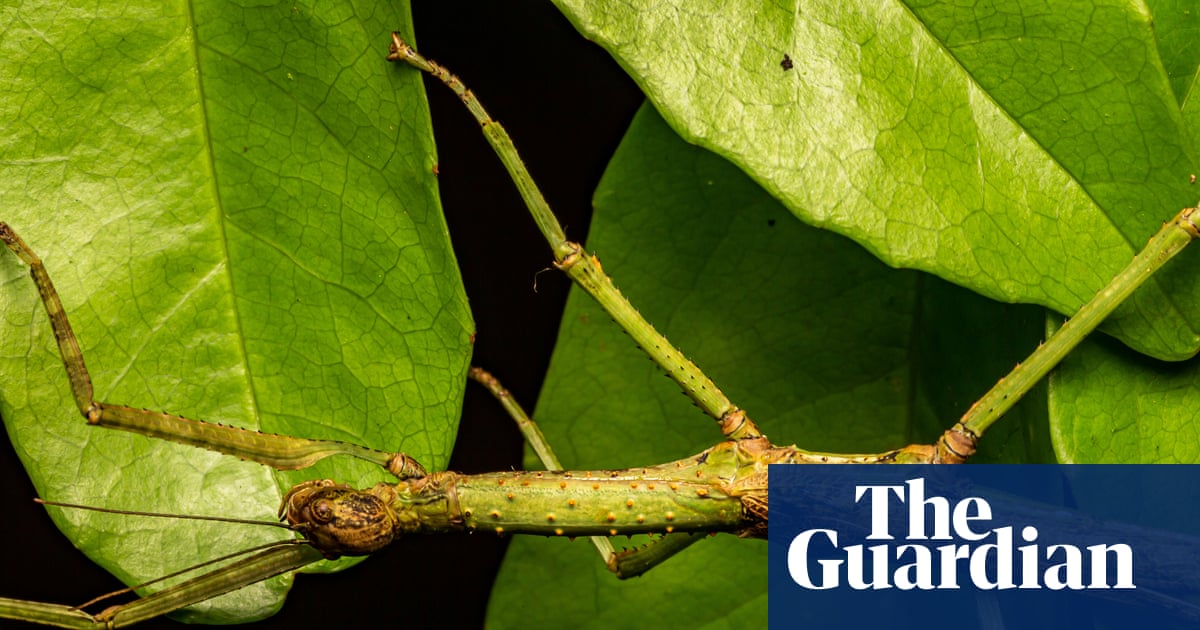
Mistaken Identity in the Field
The process of discovery itself was a lesson in humility. As Dr Braxton Jones, the study’s lead author, noted, the initial field work provided the first clue: seeing individuals that looked morphologically different and inhabited separate habitats signaled that there was 'a bit more of a complicated story here.' This experience underscores how easily we can misinterpret the natural world when we don't account for the full spectrum of variation present in nature. The stick insect, long admired by enthusiasts and scientists, has been living under a veil of mistaken identity for decades.
The findings have significant conservation implications because these newly recognized species are found in smaller habitat ranges than previously assumed. This tight spatial relationship means that protecting these unique insect populations requires a much more nuanced and detailed approach to environmental stewardship, recognizing the specific needs of each distinct group rather than treating them as a monolithic entity. The discovery also brought to light the sheer volume of life we still fail to comprehend.
The Scale of Insect Diversity
Beyond these two newly named species, the research uncovered an even more staggering scope of insect life. The study confirmed five species in total across the region, demonstrating that the diversity within this group is far richer and more varied than previously estimated. This underscores a fundamental gap in our understanding of the biodiversity that thrives in Australian ecosystems, particularly in remote and specialized habitats like the Mabi rainforests. It forces us to confront how much of the natural world remains hidden from our direct observation.
Furthermore, the research also identified another probable new species, *Acrophylla alta*, a gargantuan stick insect found in northeastern Queensland, with females capable of growing more than half a metre long. This discovery adds another layer to the understanding of insect scale and adaptation, reminding us that even seemingly small creatures hold immense biological significance and evolutionary history. The sheer number of documented stick insects on citizen science platforms already shows how much life is out there, yet this new work confirms that the unknown remains vast.
Why This Matters Now
Why should a reader care about newly classified stick insects in Queensland? Because this story is a powerful lens through which to view our relationship with the natural world. It’s not just an update on entomology; it’s a profound commentary on the limits of human observation and the necessity of deeper scientific inquiry. When we discover that familiar creatures are hiding a complex reality, it reminds us that there is immense, undocumented life operating in our shared environment.
This discovery speaks directly to the need for greater respect for biodiversity. If we cannot even accurately catalogue the insects in our own backyard, how can we effectively manage the larger ecological systems they inhabit? It calls for a shift in perspective—moving from simple cataloging to deep, respectful exploration of the intricate connections that bind all living things together. It’s a call to look closer and appreciate the complexity that exists just beyond the surface.
The Mechanism of Discovery
The mechanism behind this breakthrough was a multi-pronged approach: blending cutting-edge DNA analysis with traditional methods like examining museum collections and integrating real-time data from citizen science platforms. This synergy allowed the researchers to piece together fragmented evidence, moving beyond simple visual identification to establish robust biological distinctions between the species. It’s a perfect example of how combining diverse forms of knowledge—the tangible history in museums, the living data from the field, and the genetic blueprint—can unlock profound new understandings.
The process highlights that true discovery often happens at the intersection of different disciplines. The stick insects, in this case, serve as a fascinating metaphor: they are creatures that hide in plain sight, demanding that we look beyond surface appearances to grasp the full scope of biological reality. Their existence reminds us that our understanding of life is constantly being refined by new evidence, pushing the boundaries of what we consider known about the planet.
When we went out into the field, and we saw a whole bunch of different individuals that looked morphologically different, and they were also living in … different habitats, that was our first hint that there was a bit more of a complicated story here,” - Dr Braxton Jones of the University of Sydney
Want our sources?
Enter your email and we’ll send the claim-linked sources used for this article.
We use this address only to send this source list.