
Interesting Things
Space Junk Scars the Moon: A Reckoning for Space Exploration
The relentless drive for space exploration is exposing a profound ethical chasm between technological ambition and environmental responsibility. As debris scars the Moon, we must ask: what does true ownership mean in the cosmos? We explore how this tension shapes our understanding of progress, demanding a shift from extraction to stewardship.
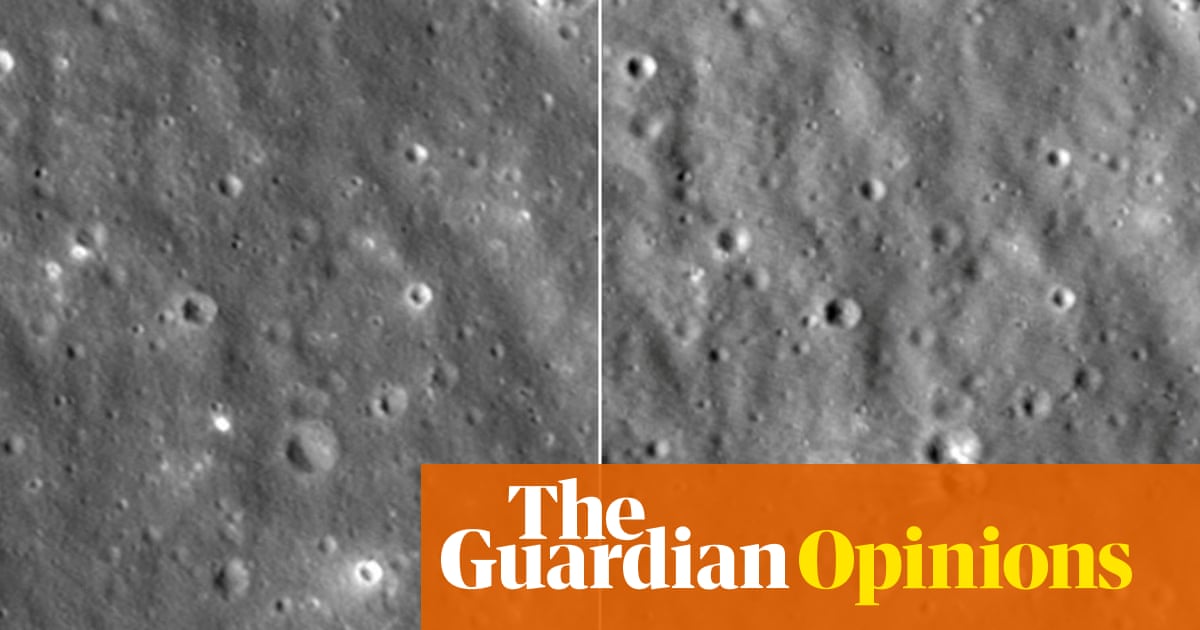
The Scar on the Moon: Debris and Entitlement
The pursuit of space, once purely about wonder, has morphed into a complex reckoning with responsibility. The very act of launching rockets and exploring the cosmos now carries an unseen cost, visible in the debris that circles the Earth and scars the Moon itself. This isn't just a technical problem; it’s a philosophical one about ownership and consequence in the vacuum of space. As Moriba Jah points out, the impact of space junk is a 'receipt'—a tangible record of an industry that treats the sky as a dumping ground.
The mechanism behind this is rooted in hubris: the belief that space is infinite and that the laws of physics won't apply to our actions. Companies operate under the assumption that they can extract value without facing the consequences, much like historical empires acted upon frontiers they didn't build. This entitlement—the posture of 'take what you want, leave what you don’t'—is now being applied to cislunar space, where ownership is winning by default because no one has claimed the alternative.
This dynamic extends beyond the Moon to low Earth orbit, where tens of thousands of tracked fragments orbit the planet. The sheer volume of this debris highlights a systemic failure in accountability. We have built a system that allows for the extraction of resources without an adequate mechanism for disposal, creating a persistent mess that future generations must inherit. The question is no longer just about technological capability, but about the ethical framework we impose on it.
The Horizon Shifts: New Frontiers and Global Ambitions
Amidst this environmental tension in space, the focus is shifting toward new frontiers. The ambition to achieve a 'Golden Age of Space Transportation' signals a tangible push for increased launches and travel, suggesting that the next phase of exploration will be defined by both technological leaps and global political maneuvering. This pursuit is intrinsically linked to terrestrial concerns; as we look outward, we must also examine the systems we leave behind on Earth, such as the environmental impact of data centers and the broader climate challenges.
The launch of instruments like NASA's Nancy Grace Roman Space Telescope underscores this dual focus: peering into the distant universe while simultaneously grappling with immediate terrestrial safety. The telescope’s mission to study exoplanets and dark matter forces us to synthesize knowledge across biology, physics, and technology, reminding us that scientific breakthroughs are inseparable from our understanding of ourselves and our place in the cosmos. This synthesis is crucial for navigating the complex realities of modern life.
The interconnectedness between these domains—astrophysics, public health, and environmental dynamics—is no longer optional. The way we manage resources on Earth, the way we treat each other, and how we manage space debris are all facets of a single, unfolding story about human behavior and its impact. Wonder in this context comes from recognizing that the universe is not separate from our concerns; it is woven into them through the very fabric of science and experience. The future demands a holistic view where cosmic curiosity fuels terrestrial stewardship.
The Cost of Progress: A Call for Stewardship
Ultimately, the story of space exploration and technology serves as a powerful mirror reflecting our current societal values. The physical evidence of debris on the Moon is a stark warning against unchecked extraction. It calls for a fundamental shift in mindset—moving from an attitude of entitlement to one of profound stewardship. For the reader, this means understanding that the pursuit of technological advancement must be tempered by an acute awareness of the consequences for both the environment and future human endeavors.
The wonder of discovery must be balanced by the gravity of responsibility. When we look at the vastness of space, we are reminded that our terrestrial concerns—water, health, social equity—are deeply intertwined with the fate of everything we launch into orbit. The mechanism driving this change is the realization that the rules we apply to the cosmos must eventually inform the rules we apply to ourselves and each other. This is where true innovation lies: in developing systems of accountability that honor both human ambition and planetary limits.
Unresolved Questions
The core tension remains unresolved: how do we reconcile the immense appetite for expansion with the finite nature of our environment? While technology advances rapidly—from new telescopes to AI in music creation—the ethical framework governing this progress lags behind. The public must engage with the reality that the pursuit of 'more' requires a radical redefinition of what it means to own and steward the universe we inhabit, ensuring that future explorations are built on a foundation of genuine responsibility rather than unchecked extraction.
The path forward depends on whether the drive for technological expansion can be successfully channeled into a shared vision of sustainability. The challenge is to ensure that the next great leaps in space exploration lead not just to new discoveries, but to a more conscious and equitable way of existing, where human ingenuity serves the health of the whole system, both terrestrial and cosmic. This requires moving beyond mere engineering to embrace a deeper sense of ecological wisdom.
Developing
The primary unresolved question is how international and corporate governance structures can be effectively implemented to manage orbital debris and resource extraction in space. Furthermore, the public's role in demanding accountability for these activities remains an evolving area of focus as new technologies emerge rapidly. The tension between technological momentum and ethical responsibility continues to define the dialogue around space exploration and technology synthesis.
Further examination is needed into the practical mechanisms by which the philosophical shift toward stewardship translates into enforceable international regulations for space operations, ensuring that the pursuit of cosmic knowledge does not simply replicate old patterns of exploitation in a new domain. The integration of these scientific realities into public policy remains an open frontier for discussion and action. (See also: Space Exploration and Technology Synthesis; Space junk punched a new hole in the moon. It’s not ours to abuse).
Space junk punched a new hole in the moon. It’s not ours to abuse | Moriba Jah
Want our sources?
Enter your email and we’ll send the claim-linked sources used for this article.
We use this address only to send this source list.