
Music
Neuroscientist Explores Why Our Brains Need Pop Concerts
A neuroscientist argues that shared experiences at pop concerts induce 'collective effervescence,' a state necessary to restore social bonds eroded by modern digital distraction and loneliness, suggesting live music serves as a vital circuit breaker for the brain's default mode network.
The music and the moment
A neuroscientist named Bala Subramaniam has explored the neurological necessity of pop concerts, arguing that these shared musical experiences serve a crucial function for human well-being. The core concept presented is 'collective effervescence,' a term coined by sociologist Émile Durkheim, which describes the electric, communal intensity experienced when individuals become swept up in a shared moment. Subramaniam suggests that this state is essential because the drudgery of ordinary life and constant digital distraction erodes genuine social bonds.
Subramaniam notes that for 'collective effervescence' to occur organically, physical presence is required; bodies must be in the same space, moving to the same rhythm. This synchronization is presented as a mechanism that restores social bonds and shared beliefs that are otherwise eroded by modern life. The neuroscientist links this experience to ego dissolution, noting that intense states of flow—such as those experienced during meditation or extreme sports—can cause the 'default mode network' (DMN), the brain circuit responsible for planning, daydreaming, and self-talking, to quiet down. He suggests that concerts act as a 'circuit breaker' for this overactive internal monologue.
The article further posits that synchronized dancing with 'out-group members,' such as those of a different age group, has been shown in some synchrony research to increase the likelihood of real-life cooperation. This implies that the communal energy generated by music facilitates a form of social connection that is vital for human health.
Subramaniam contrasts this collective experience with the modern reality where digital distractions—such as constant social media feeds and algorithmic curation—have eroded the prehistoric ritual of ecstatic, synchronous dancing. He suggests that the yearning for live music stems from a deeper need to reconnect with something primal and necessary, positioning concerts and festivals as spaces that reliably produce collective belonging.
The piece concludes by advocating for treating these communal spaces—dancefloors and concerts—with the same importance as libraries or museums, suggesting they should be recognized as public health assets. The author implies that this shared experience offers a form of enrichment that no application, algorithm, or prescription can replicate, serving as a necessary antidote to the loneliness epidemic exacerbated by contemporary life.
An exploration by a neuroscientist on why shared experiences at pop concerts are neurologically necessary for restoring social bonds and combating modern loneliness.
I’m a neuroscientist. Here’s why our brains need pop concerts | Bala Subramaniam | The Guardian
The mechanism involves shared physical presence—bodies being in the same space, dancing to the same rhythm—which activates neural pathways, leading to ego dissolution from self-referential thought (Default Mode Network) and restoring social connection.
The neuroscientist posits that shared experiences at pop concerts facilitate a state called 'collective effervescence,' which restores social bonds and shared beliefs eroded by daily life, and that synchronized dancing boosts social closeness.
The observation is framed against the backdrop of contemporary society where constant digital distraction erodes genuine communal interaction.
The context is the modern environment characterized by digital distraction and social comparison, contrasting it with the primal need for communal experience found in ancient rituals like cave drawings.
A neuroscientist named Bala Subramaniam explored the neurological reasons behind the human need for pop concerts.
The phenomenon matters because the loneliness epidemic, compounded by digital distraction, poses a public health risk, and live music offers an irreplaceable experience that no technology can replicate for community health.
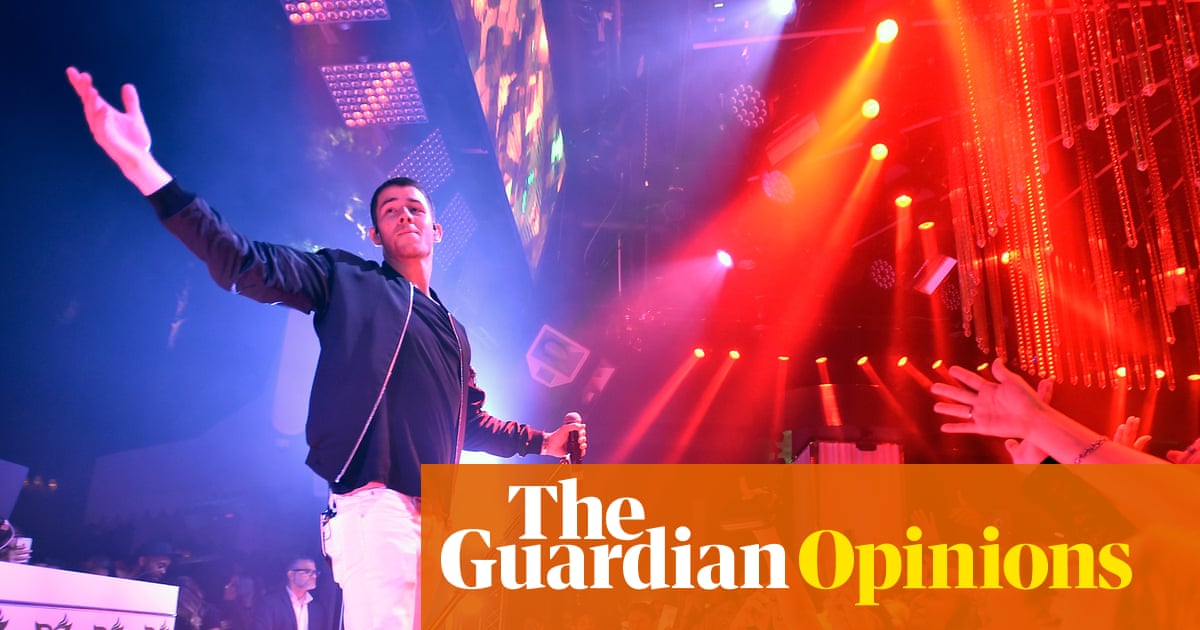
I found myself surrounded by thousands of young people all singing the same songs, swaying to the same rhythm, and participating in the same moment.
The loneliness epidemic, compounded by the era of constant digital distraction and social comparison, is a serious public health risk.
Womad festival review – hugely welcome return of joyous planet-spanning music fest
Additional context
The concept of 'collective effervescence' moves beyond mere social bonding; it represents a deep, physiological necessity for human psychological health. When the neuroscientist observes that synchronized musical engagement causes the Default Mode Network to quiet down, it suggests that the intense focus on internal self-referential thought—the constant worrying, planning, and self-criticism characteristic of modern existence—is temporarily suspended. This suspension allows for a genuine shift from the isolated, fragmented self to an integrated communal awareness. This state is not just fleeting enjoyment; it is a mechanism for recalibrating the brain's baseline, moving it away from anxiety-driven patterns toward states of shared, positive emotional resonance that are fundamentally restorative. Furthermore, the evidence points toward the specific role of music in bridging social divides.
The synchronization observed during concerts forces participants to engage with an 'out-group' in a non-verbal, embodied way, which research suggests directly enhances prosocial behavior and cooperation. This mechanism implies that pop music acts as a universal language capable of bypassing complex verbal barriers, allowing for immediate, visceral empathy. In an era increasingly defined by polarized discourse and digital echo chambers, the shared rhythm of a concert offers a tangible, undeniable reality where individual differences dissolve into a unified, energetic whole. This communal immersion provides a powerful antidote to the isolation fostered by mediated communication, offering a form of authentic belonging that algorithms cannot simulate. Consequently, advocating for recognizing these musical gatherings as public health assets is not merely an aesthetic preference but a call for integrating communal ritual into public wellness strategies.
If shared emotional intensity demonstrably reduces psychological stress and fosters social cohesion, then providing access to such experiences should be prioritized alongside traditional forms of healthcare. This perspective reframes the concert experience from mere entertainment to a vital neurological intervention, underscoring that the pursuit of live music is intrinsically linked to the fundamental human requirement for deep, felt connection.
I found myself surrounded by thousands of young people all singing the same songs, swaying to the same rhythm, and participating in the same moment.
The loneliness epidemic, compounded by the era of constant digital distraction and social comparison, is a serious public health risk.
Want our sources?
Enter your email and we’ll send the claim-linked sources used for this article.
We use this address only to send this source list.